Dr. Sven Jungmann · Physician. Founder. Speaker.
How AI changes
the work we do.
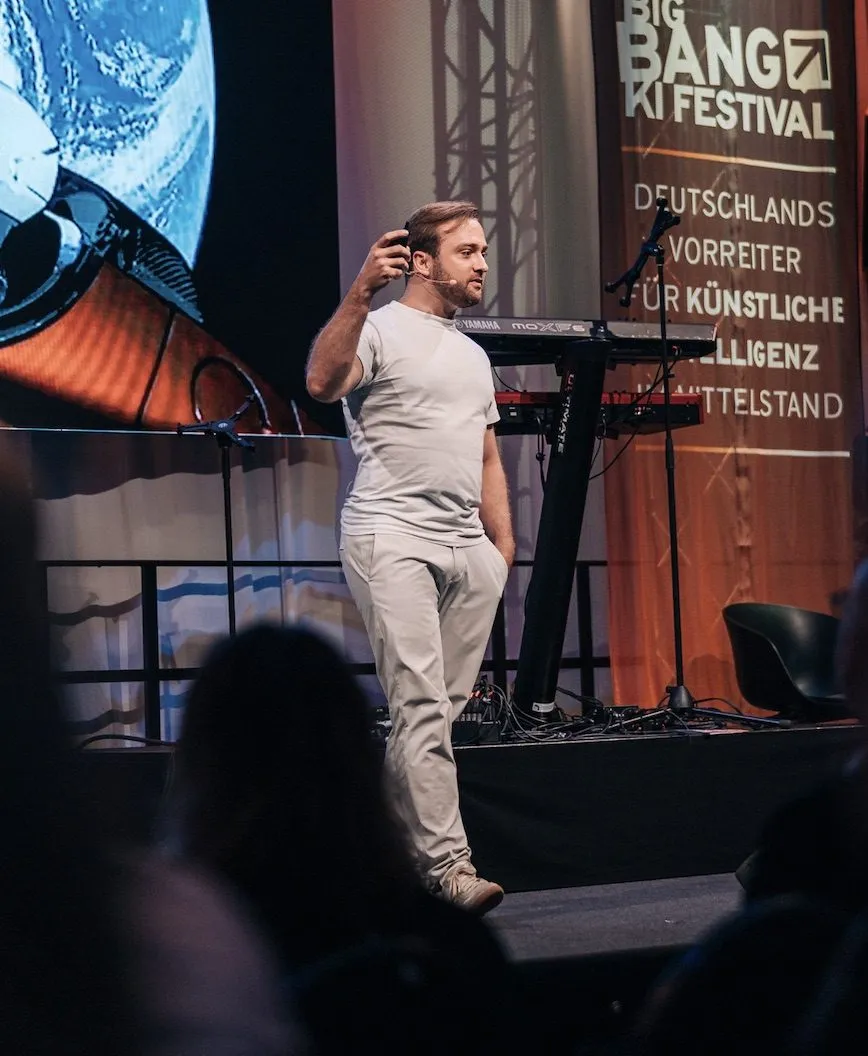
I’m Sven Jungmann, a physician and the founder of aiomics. I build AI for clinical work and speak about what its adoption asks of people and organisations.

A selection of previous hosts
What is your audience working through?
Three areas of inquiry, shaped into a talk for your event. With examples that connect to the decisions your audience faces.
01What becomes of our profession?
For clinicians, professional associations and leaders
What becomes of our profession?
For clinicians, professional associations and leaders
When AI drafts text, summarises records and makes suggestions, professional work shifts. We examine which judgments people still need to make, how to assess outputs and how to develop those skills.
What your audience takes away
- Distinguish tasks from responsibility in your profession.
- Recognise where expertise matters when assessing AI output.
- Take practical questions back to your team.
02How does AI change everyday work?
For pharmaceutical, medical technology and executive teams
How does AI change everyday work?
For pharmaceutical, medical technology and executive teams
Between a convincing demonstration and reliable use lie responsibilities, workflows and incentives. I connect clinical experience with building a company: where should we begin, how do we measure relief, and who needs to be involved?
What your audience takes away
- Separate a suitable use case from an appealing demonstration.
- Include review work and handovers in the assessment.
- Discuss adoption as a specific leadership responsibility.
03How much room should AI have to act?
For executives, investors and established businesses
How much room should AI have to act?
For executives, investors and established businesses
A system drafting an answer needs different boundaries from one sending a message or changing records. Through accessible examples, we examine permissions, review and decisions under uncertainty.
What your audience takes away
- Distinguish AI applications by their possible consequences.
- Define approvals and stop conditions before rollout.
- Assess opportunities and implementation obstacles more precisely.

The questions come from the work.
My main focus is building aiomics, where we develop AI for medical documentation and its verification. Working with clinicians and hospital leaders keeps me close to the practical demands of adoption.
Speaking is part of that exchange. I share lessons, hear questions from other organisations and build relationships with potential customers and partners. The conversations feed back into building the company.
My backgroundIdeas you can put to work.
Reflections, guides and practical instructions for considered AI adoption. With sources and explicit limitations.
Explore the library
Who owns the outcome when AI work crosses departments?
A fictional procurement case shows how AI can shift work between teams. Outcome ownership needs a shared definition of success and clear decision rights.
Read
What an AI benchmark can tell a hospital
Technical capability, collaboration and patient outcomes answer different questions. Eight supplier questions help hospitals connect benchmark evidence to the intended use.
Read
Prepare an AI talk around your audience’s decisions
A guide for organisers: define the audience, decision and format, distinguish scientific claims, and discuss accessibility, recording and medical education recognition early.
ReadWhat should your event make possible?
Tell me about your audience, occasion and timing. We can shape a talk around the questions that matter to them.